
-
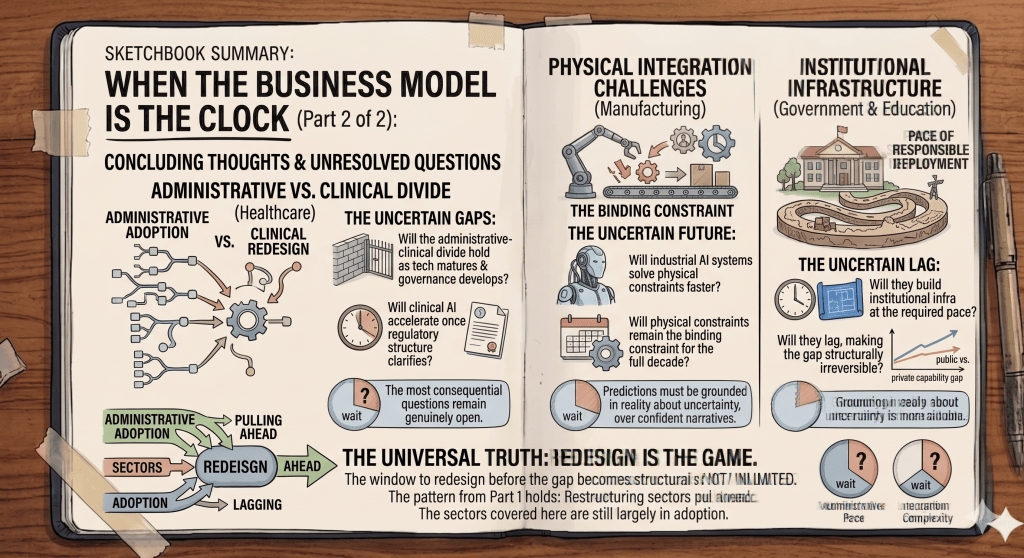
Understanding Sector Change: The Role of Business Models in AI Adoption, Part 2
Part 1 of the sector clock established that the sectors restructuring fastest share a common profile: digital-native workflows, clear and measurable units of value, relatively low regulatory barriers to workflow change, and competitive dynamics intense enough to punish non-adoption on a short timeline. Financial services, legal, and professional services meet…
-
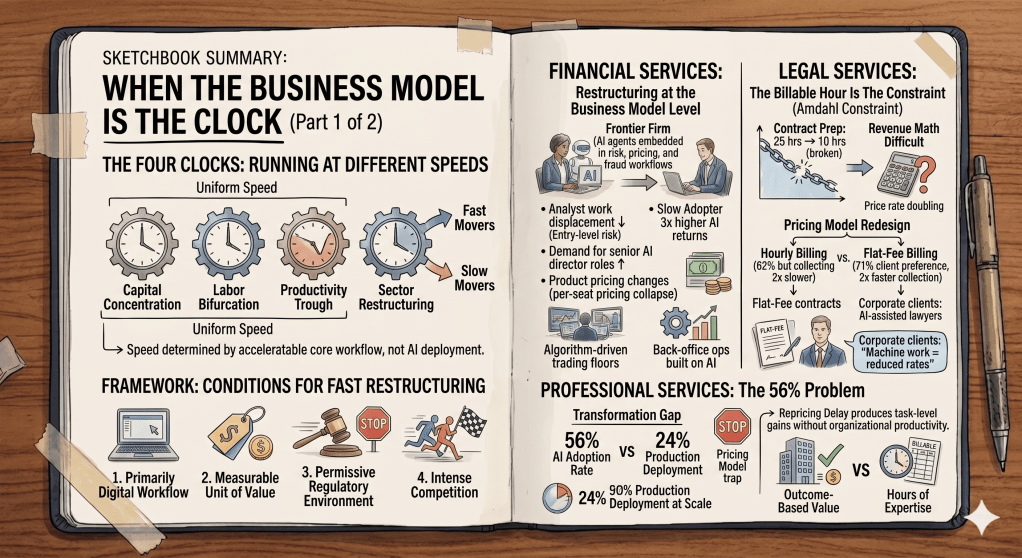
Understanding Sector Change: The Role of Business Models in AI Adoption
The four clocks in this series have been running at roughly the same speed. Capital concentration, labor bifurcation, and the productivity trough are all happening simultaneously, which is what makes the current moment structurally distinct from previous technology transitions. But the fourth clock, sector restructuring, doesn’t run at a uniform…
-
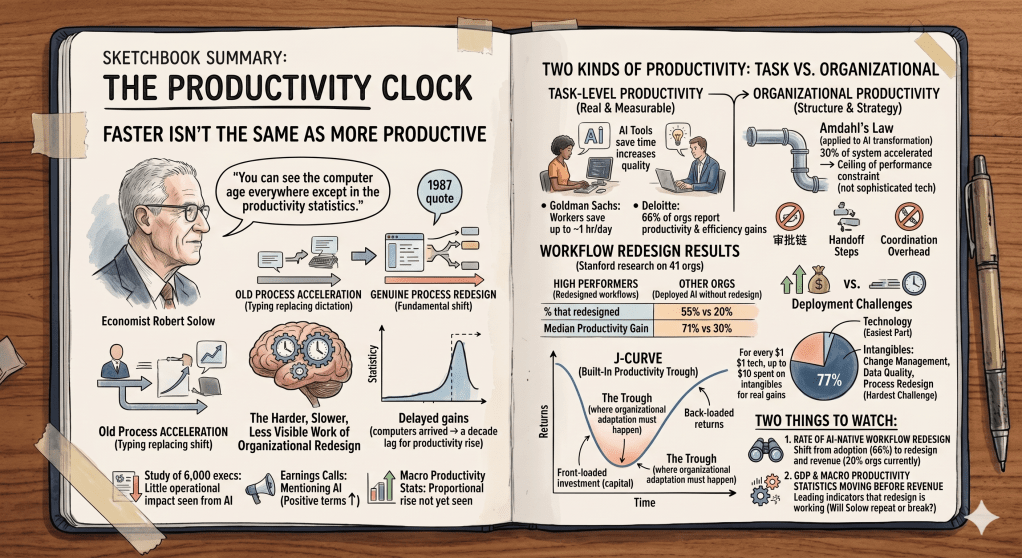
Faster Isn’t the Same as More Productive
The Productivity Clock In 1987, economist Robert Solow made an observation that became one of the most quoted lines in technology economics: “You can see the computer age everywhere except in the productivity statistics.” It took roughly a decade for that to change. Computers had arrived. Organizations were using them.…
-
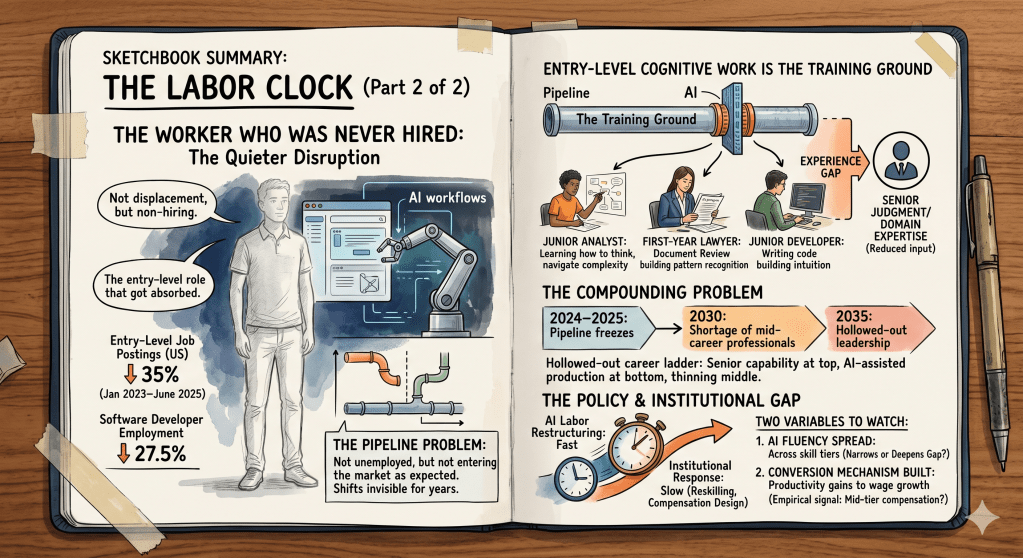
The Workers Who Were Never Hired
Part 2 of 2: The Labor Clock This is Part 2 of a two-part piece on the labor restructuring underway in the AI economy. Part 1 covered the bifurcation already visible in current data and the historical pattern of who captures productivity surpluses. This piece goes underneath that, to a…
-
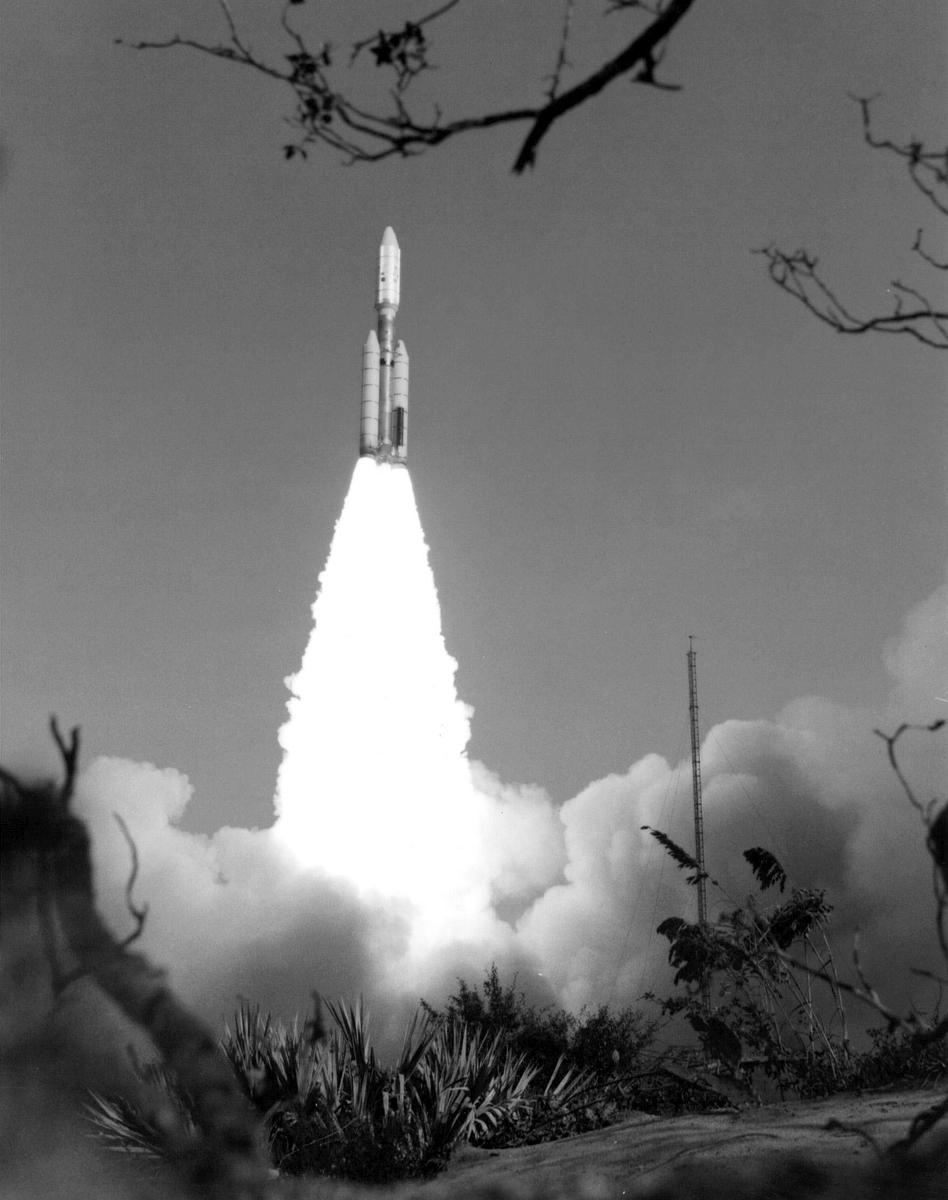
Still Flying: Voyager 1 at the Edge of Everything
Voyager 1 is more than 15 billion miles from Earth. It launched in 1977, before the personal computer, before the internet, before we decided anything older than eighteen months was legacy debt. It was built by people using slide rules. It is still on. Late last week, NASA turned off…
-

The Moat and the Mindset: Why You Must Watch Jensen Huang’s Latest Interview
If you spend your days analyzing how Agentic AI is poised to upend traditional enterprise software, you get used to a lot of polished, carefully manicured CEO talking points. That’s exactly why Dwarkesh Patel’s recent interview with Nvidia CEO Jensen Huang is required viewing. It is a rare, unvarnished look…
-
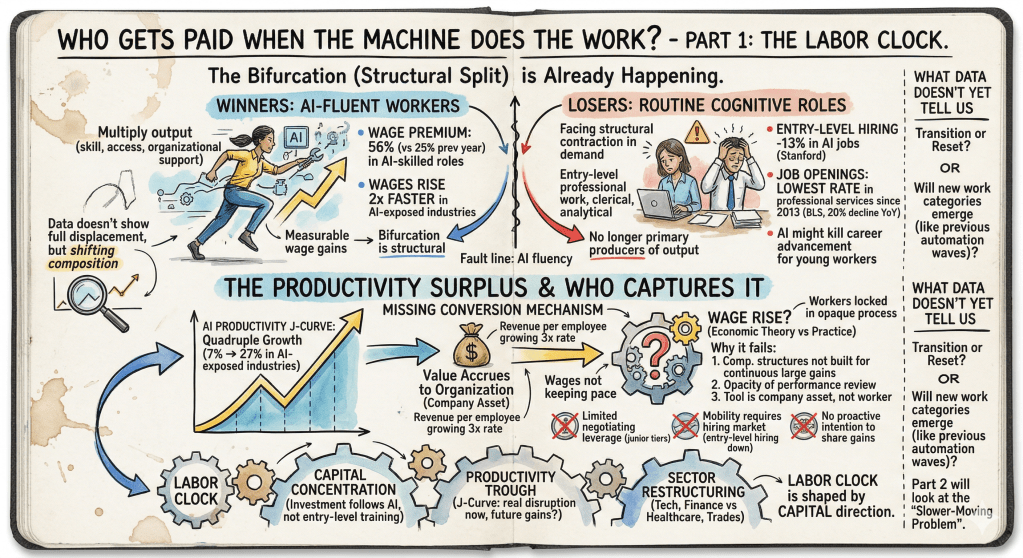
Who Gets Paid When the Machine Does the Work?
Part 1 of 2: The Labor Clock This is a two-part piece. The labor restructuring is the most layered of the four clocks in the AI economic reconfiguration, so I’m breaking this up into two parts. Part 1 covers what the data already shows: who is capturing the productivity surplus,…
-
The roadtrip
Tyler Cowen has one of his regular, random posts over at Marginal Revolution (excellent blog that is worth following): I have driven cross-country four times, at least if you count a 3/4 trip as valid. I also have driving experience in virtually all states, including Hawaii and Alaska, neither of which…
-
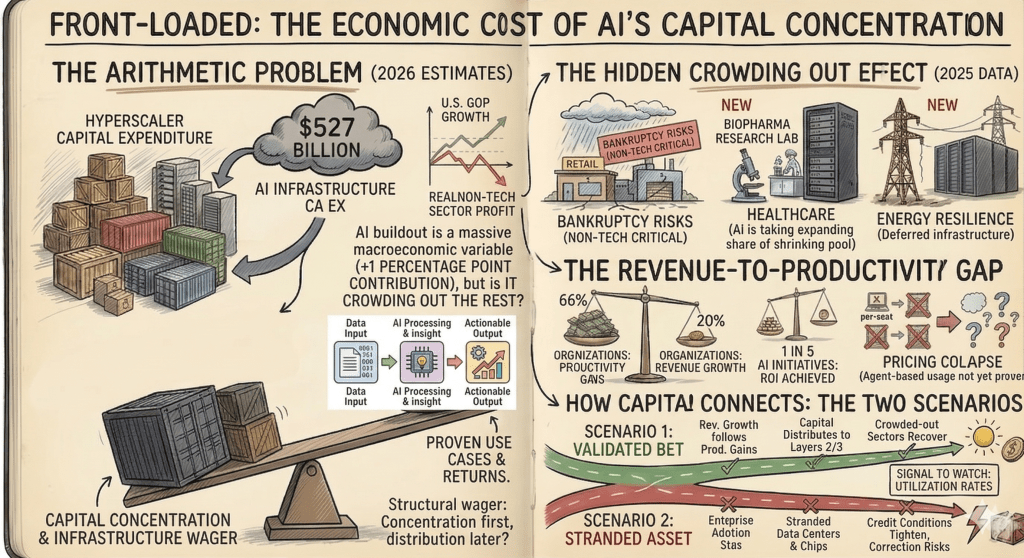
Front-Loaded: The Economic Cost of AI’s Capital Concentration
The AI infrastructure industry faces a significant financial challenge, needing approximately $800 billion annually to cover interest on investments. As capital concentrates in this sector, it affects broader economic stability, with potential underfunding of critical areas like healthcare and climate resilience. Two paths lie ahead: successful returns or fiscal strain.

This work is licensed under a Creative Commons Attribution-NonCommercial-ShareAlike 4.0 International License.
 nitin badjatia